📞  — free, 24/7
 — free, 24/7| Package | Price per Dose | Price | |
|---|---|---|---|
| 270 pills | €0,76 | €226,99 €204,29 Free shipping | |
| 180 pills | €0,82 | €163,09 €146,78 | |
| 120 pills | €0,92 | €122,74 €110,46 | |
| 90 pills | €1,01 | €100,88 €90,79 | |
| 60 pills | €1,26 | €84,06 €75,65 | |
| 360 pills | €1,30 | €517,90 €466,11 Free shipping | |
| 270 pills | €1,36 | €410,28 €369,25 Free shipping | |
| 180 pills | €1,50 | €300,98 €270,88 Free shipping | |
| 120 pills | €1,53 | €203,45 €183,10 Free shipping | |
| 90 pills | €1,66 | €166,46 €149,81 | |
| 60 pills | €1,82 | €121,05 €108,95 | |
| 30 pills | €2,27 | €75,65 €68,09 | |
| 360 pills | €3,25 | €1.301,50 €1.171,35 Free shipping | |
| 270 pills | €3,31 | €997,14 €897,42 Free shipping | |
| 180 pills | €3,39 | €677,65 €609,88 Free shipping | |
| 120 pills | €3,56 | €474,18 €426,76 Free shipping | |
| 90 pills | €3,74 | €373,29 €335,96 Free shipping | |
| 60 pills | €4,27 | €284,16 €255,75 Free shipping | |
| 30 pills | €4,36 | €146,28 €131,65 | |
| 360 pills | €3,83 | €1.531,87 €1.378,68 Free shipping | |
| 180 pills | €4,63 | €925,50 €832,95 Free shipping | |
| 120 pills | €4,86 | €647,83 €583,05 Free shipping | |
| 90 pills | €5,01 | €501,28 €451,16 Free shipping | |
| 60 pills | €5,21 | €347,02 €312,32 Free shipping | |
| 30 pills | €6,01 | €200,47 €180,43 | |
| 20 pills | €6,93 | €154,18 €138,76 |
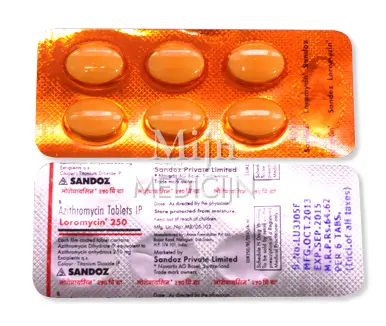
Azithromycin is a macrolide antibiotic that inhibits bacterial protein synthesis by binding to the 50S ribosomal subunit, and it is primarily used to treat a range of respiratory, skin, and sexually transmitted infections. It has a long tissue half-life that supports convenient once-daily dosing and shorter course durations in many infections.
In clinical practice, azithromycin is valued for its activity against atypical pathogens such as Mycoplasma pneumoniae and Chlamydophila species, its generally favorable tolerability, and its relatively broad spectrum within community-acquired infection scenarios. This page summarizes how it is used, how it works, and what safety considerations patients should know.
Most common indications include community-acquired pneumonia, acute bacterial sinusitis, and acute otitis media. In these settings, azithromycin targets typical respiratory pathogens alongside atypical organisms, helping reduce symptoms with shorter courses than some alternatives. Clinicians may choose azithromycin for penicillin-allergic patients when first-line options pose concerns, or when a single daily tablet improves adherence in outpatient care.
It is widely used for uncomplicated skin and soft tissue infections caused by streptococci and staphylococci, including non-purulent cellulitis and wound infections. It is also a practical option for gynecologic infections such as chlamydial cervicitis and nongonococcal urethritis, and for pelvic inflammatory disease when used as part of combination therapy according to guidelines. In certain contexts, azithromycin is used for infections of the eye and for specific pediatric conditions where rapid, oral therapy is advantageous.
Azithromycin’s role in sexually transmitted infections includes treating asymptomatic or mild chlamydial infections and as part of coinfection therapy for gonorrhea when indicated. It is sometimes used for traveler's diarrhea or dysentery caused by enteric pathogens in appropriate clinical contexts, though resistance patterns and local guidelines shape its use here. While not a first-line agent for all gastrointestinal infections, azithromycin remains a practical option due to its tolerability and dosing convenience in selected travelers and outpatient cases.
Mechanistically, azithromycin blocks the bacterial ribosome's ability to move along messenger RNA, effectively shutting down protein production. This action is primarily bacteriostatic at standard doses, slowing bacterial growth and allowing the immune system to clear the infection; higher concentrations can produce bactericidal effects for certain organisms. Its activity spans many common respiratory pathogens plus atypical bacteria that do not rely on the same biochemical pathways as typical Gram-positive and Gram-negative bacteria.
Beyond the target engagement, azithromycin concentrates inside body tissues and within immune cells, enabling delivery to infection sites even when blood levels seem modest. Its long half-life—on the order of several days—supports once-daily dosing and short treatment courses. Pharmacokinetic properties, along with oral bioavailability and good lung tissue penetration, help explain its practical use in outpatient settings.
Azithromycin is available in tablets (commonly 250 mg and 500 mg strengths), an oral suspension, and an intravenous form for inpatient use. The total course length and dose depend on the infection being treated, but typical outpatient regimens range from 3 to 5 days; some infections may be treated with a single-dose regimen or a longer course, under clinician guidance.
When taken by mouth, azithromycin can be taken with or without food; taking it with a small amount of food may reduce stomach upset for some patients. The intravenous form is reserved for hospitalized patients or when oral therapy cannot be used, with a plan to switch to oral therapy as soon as feasible and appropriate. Always follow the clinician’s dosing instructions and report any missed doses promptly.
Common side effects include digestive upset such as nausea, diarrhea, abdominal pain, and occasional vomiting, as well as headache. Most patients tolerate azithromycin well, and side effects often resolve after a few days of therapy.
Serious but rare risks include QT interval prolongation, especially when azithromycin is used with other drugs that affect cardiac rhythm or in patients with preexisting heart conditions. Liver injury, severe allergic reactions, and Clostridioides difficile–associated diarrhea have been reported but are uncommon. Caution is advised in patients with significant liver or kidney disease, and treatment should be stopped if signs of severe allergic reaction or liver injury occur. Drug interactions are limited but can occur with certain medicines, and antacids may affect absorption if used at the same time as dosing. Always discuss current medications and health conditions with a clinician before starting therapy.
14–21 days. Free from €182,34 .
5–9 days. €27,35
−10% when paying with cryptocurrency.
−10% on all repeat orders.
All orders are packed in neutral, unbranded boxes with no product name on the outside.