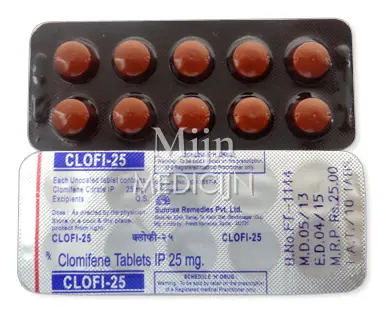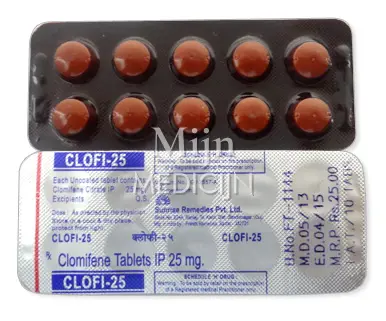
📞  — free, 24/7
 — free, 24/7| Package | Price per Dose | Price | |
|---|---|---|---|
| 360 pills | €0,94 | €337,47 Free shipping | |
| 180 pills | €1,00 | €180,08 | |
| 120 pills | €1,09 | €130,14 | |
| 90 pills | €1,30 | €116,52 | |
| 60 pills | €1,56 | €93,81 | |
| 30 pills | €1,92 | €57,49 | |
| 10 pills | €2,42 | €24,20 | |
| 360 pills | €1,47 | €528,16 Free shipping | |
| 180 pills | €1,51 | €272,39 Free shipping | |
| 120 pills | €1,66 | €199,75 Free shipping | |
| 90 pills | €1,83 | €164,94 | |
| 60 pills | €2,19 | €131,65 | |
| 30 pills | €2,42 | €72,63 | |
| 10 pills | €2,72 | €27,23 | |
| 180 pills | €1,82 | €326,88 Free shipping | |
| 120 pills | €2,06 | €246,67 Free shipping | |
| 90 pills | €2,33 | €210,35 Free shipping | |
| 60 pills | €2,50 | €149,81 | |
| 30 pills | €2,72 | €81,71 | |
| 10 pills | €3,03 | €30,25 |
Can Clomiphene help me get pregnant? Many people ask this as they learn about the medicine. Clomiphene is a pill taken by mouth. It is a selective estrogen receptor modulator (SERM). It works by tricking the brain into thinking estrogen levels are low, which signals the pituitary gland to release more of the hormones FSH and LH. These hormones help an egg grow and released during a menstrual cycle. Clomiphene is usually taken for a short course at the start of the cycle. Your doctor will set the exact dose and duration for you.
Clomiphene is not a hormone replacement. It does not contain estrogen. It is prescribed when ovulation is not regular or is absent. It can be used for conditions like polycystic ovary syndrome (PCOS) or other types of infertility where ovulation is a factor. It may also be used as part of certain fertility treatment plans with assisted reproduction. Your doctor will explain how this medicine fits into your overall plan.
Clomiphene is most often used to help people who have trouble ovulating become pregnant. When ovulation happens irregularly or not at all, this medicine can help trigger the release of an egg. It is commonly chosen for PCOS, a common cause of infertility that affects how the ovaries release eggs. It may also be used when the cause of infertility is related to problems with ovulation.
The medicine is not effective for infertility caused by problems that are not related to ovulation. If your doctor believes the barrier to pregnancy is another issue, clomiphene may not be the right choice. In some cases, clomiphene is used in combination with other fertility treatments. In men, clomiphene is sometimes used off-label to support testosterone levels and fertility, but this use is less common and depends on a clinician’s judgment.
Clomiphene is prescribed only after a careful review of your medical history and your current condition. Your doctor will monitor your response with exams and tests. They may adjust the dose or switch to another therapy if blood tests or scans suggest the medicine is not working as hoped or if side effects occur.
Do not take clomiphene if you are pregnant or think you might be pregnant. Clomiphene can harm a developing baby. If you become pregnant while using it, tell your doctor right away and stop the medicine unless told otherwise by your clinician.
Do not take clomiphene if you have abnormal vaginal bleeding for unknown reasons, or if you have liver disease or a liver tumor. Severe liver problems can worsen with this medicine and require different care. It is also not suitable if you have ovarian cysts not due to PCOS or a history of ovarian cancer or other estrogen-dependent tumors.
Precautions are important. If you have uncontrolled thyroid or adrenal problems, discuss them with your doctor. These conditions can affect how clomiphene works and may require adjustments in treatment. If you have a history of poor response to fertility medicines or have had a previous ovarian hyperstimulation syndrome (OHSS), your clinician will weigh the risks closely and may use slower dosing or closer monitoring.
During treatment, you may have regular ultrasound exams and blood tests to monitor how your ovaries respond and to check hormone levels. Tell your doctor about all medicines you take, including prescription drugs, over-the-counter medicines, and supplements. Some medicines can interact with clomiphene or affect its effectiveness. If you have any visual symptoms like sudden blurred vision or flashes of light, contact your clinician promptly, as rare eye changes can occur with fertility medicines.
Common side effects include hot flashes, mood changes, nausea, abdominal discomfort or bloating, breast tenderness, and headaches. Some people notice skin flushing or mild dizziness. These effects are usually mild and improve as your body adjusts or after the treatment ends.
Uncommon side effects can include visual changes such as blurred vision, light sensitivity, or seeing spots. You might notice changes in your menstrual cycle beyond the intended timing or mild weight changes. Some people report feeling giddy or more emotional than usual. These effects are generally reversible after stopping the medicine.
Rare side effects are more serious and need medical attention. They can include signs of an allergic reaction (rash, itching, swelling, severe dizziness, trouble breathing), severe abdominal or pelvic pain which could signal an ovarian issue, or symptoms of liver problems (dark urine, persistent nausea, yellowing of the skin or eyes). Very rarely, fertility medicines like clomiphene can lead to ovarian hyperstimulation or other complications; report new or worsening symptoms promptly so your doctor can respond.
Tell your doctor about every medicine you take, including vitamins and herbal products. Some medicines can interfere with how clomiphene works, or their effects can be altered by clomiphene. For example, estrogen-containing medicines used for birth control or hormone therapy can reduce the effectiveness of clomiphene in triggering ovulation. Discuss any plan to use such medicines with your clinician.
Clomiphene can interact with drugs that affect liver enzymes. Medicines that speed up or slow down liver metabolism may change clomiphene levels in your blood. This can alter both effectiveness and side effects. If you take other fertility drugs at the same time, such as FSH or LH preparations, your risk of ovarian overstimulation and multiple pregnancy may rise, and your doctor will closely monitor you.
Other agents, such as tamoxifen or certain aromatase inhibitors, may counteract or change clomiphene’s action. Your clinician will consider how these medicines fit into your treatment plan. Do not start or stop any drug without talking to the prescribing clinician, especially around fertility therapies, to avoid unintended interactions or ineffective treatment.
14–21 days. Free from €182,34 .
5–9 days. €27,35
−10% when paying with cryptocurrency.
−10% on all repeat orders.
All orders are packed in neutral, unbranded boxes with no product name on the outside.