📞  — free, 24/7
 — free, 24/7| Package | Price per Dose | Price | |
|---|---|---|---|
| 360 pills | €0,73 | €376,75 €263,72 Free shipping | |
| 180 pills | €0,80 | €206,17 €144,32 | |
| 120 pills | €0,91 | €154,60 €108,22 | |
| 90 pills | €1,00 | €128,83 €90,18 | |
| 60 pills | €1,27 | €108,99 €76,29 | |
| 30 pills | €2,07 | €89,16 €62,41 |
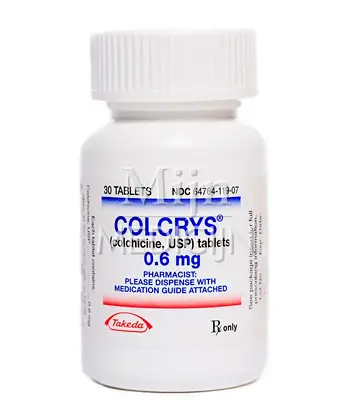
Colchicine is a medicine with a long history in treating inflammatory conditions. It is often used in short courses to manage gout flares or to prevent future attacks. It is also prescribed for certain hereditary conditions that cause recurrent inflammation. In online pharmacies you may see it offered as a generic option or under brand names. The drug requires a prescription in most places and should be used under the supervision of a clinician.
Colchicine acts by slowing the activity of neutrophils, a type of white blood cell involved in inflammation. It disrupts cellular processes that rely on tubulin, which reduces the inflammatory response. This helps lessen swelling, pain, and redness during attacks. The medicine does not cure the underlying disease but can shorten the duration of symptoms when taken early in an attack.
For an acute gout flare, a common regimen is 1.2 mg at the onset, followed by 0.6 mg after one hour. Do not exceed 1.8 mg in a 24 hour period unless directed by a clinician. For prevention of future attacks, the usual dose is 0.6 mg once or twice daily, depending on the plan chosen by your doctor. In familial Mediterranean fever, doctors may prescribe higher daily totals under careful supervision. In pericarditis, colchicine may be used as part of a broader treatment strategy. Always follow your doctor’s or pharmacist’s directions, as dosing depends on age, kidney function, and other medications you take.
Relief from a gout attack can begin within hours, but the full benefit may take a day or two. Some patients notice improvement after the first dose, while others may need more time. Side effects such as stomach upset can occur early. If you miss a dose, skip it and resume your regular schedule rather than doubling up. Do not alter the dose without professional advice.
Common side effects include nausea, vomiting, and diarrhea. Abdominal pain or cramping may occur, especially with higher doses. These symptoms often improve with continued use or dose adjustments. Seek medical help for severe or persistent stomach problems, signs of dehydration, or unusual bleeding. Long-term or high-dose use can raise the risk of bone marrow suppression or muscle problems, particularly in people with kidney or liver issues or when taken with certain drugs.
Colchicine interacts with many medicines. Potent inhibitors of CYP3A4 or P-glycoprotein can raise colchicine levels and increase the risk of serious side effects. Examples include some antibiotics, antifungals, HIV medications, certain heart drugs, and kidney medicines. Grapefruit juice may also raise colchicine levels. If you have kidney or liver disease, or you are elderly, talk to your clinician before use. Colchicine is generally avoided in pregnancy unless the benefits clearly outweigh risks, and it is typically not recommended while breastfeeding without medical guidance.
Store colchicine at room temperature, away from moisture and heat. Keep it out of reach of children. When buying online, choose a reputable pharmacy that requires a prescription and provides clear dosage instructions. Do not share medications or adjust the dose without clinician input. Always verify that your online order matches the prescription you have, and plan for follow-up care to monitor tolerance and effectiveness. This helps ensure safe use and the best possible outcome.
14–21 days. Free from €182,34 .
5–9 days. €27,35
−10% when paying with cryptocurrency.
−10% on all repeat orders.
All orders are packed in neutral, unbranded boxes with no product name on the outside.